
Getting stuck is part of off-roading. Getting recovered the wrong way is where things can get expensive, dangerous, or both. Whether you are buried in mud, hung up on rocks, stuck in sand, or caught on a steep trail section, the goal is not just to get moving again. The goal is to recover the vehicle safely without damaging your rig, hurting someone, or making the situation worse.
This guide breaks down how to recover a vehicle safely on the trail, what recovery gear matters most, and what mistakes to avoid before you put tension on a strap, rope, or winch line.
How to Recover a Vehicle Safely: The Basic Trail Recovery Plan
The safest way to recover a vehicle safely is to slow down, inspect the situation, choose the right recovery point, use the right gear, and keep every person away from loaded straps or winch lines before tension is applied.

Start With Safety Before You Touch the Recovery Gear
Before anyone grabs a strap or winch controller, stop and look at the full situation. Check where the vehicle is stuck, how deep the tires are buried, whether the frame or suspension is sitting on an obstacle, and where the vehicle will move once it breaks free.
Everyone who is not directly involved should move far away from the recovery area. A strap, shackle, hook, or winch line under load can become dangerous if something fails. Do not let people stand between the stuck vehicle and the recovery vehicle, near the winch line, or close to the strap.
The driver of the stuck vehicle and the recovery driver should agree on simple communication before starting. Hand signals, radios, or a spotter can prevent confusion. A safe recovery starts slowly, not with someone yelling, guessing, or punching the throttle.
Use Rated Recovery Points Only
One of the biggest mistakes off-roaders make is attaching recovery gear to the wrong part of the vehicle. Do not connect a strap or winch line to a bumper bracket, suspension arm, tie rod, trailer ball, random hook, or anything that is not designed for recovery loads.
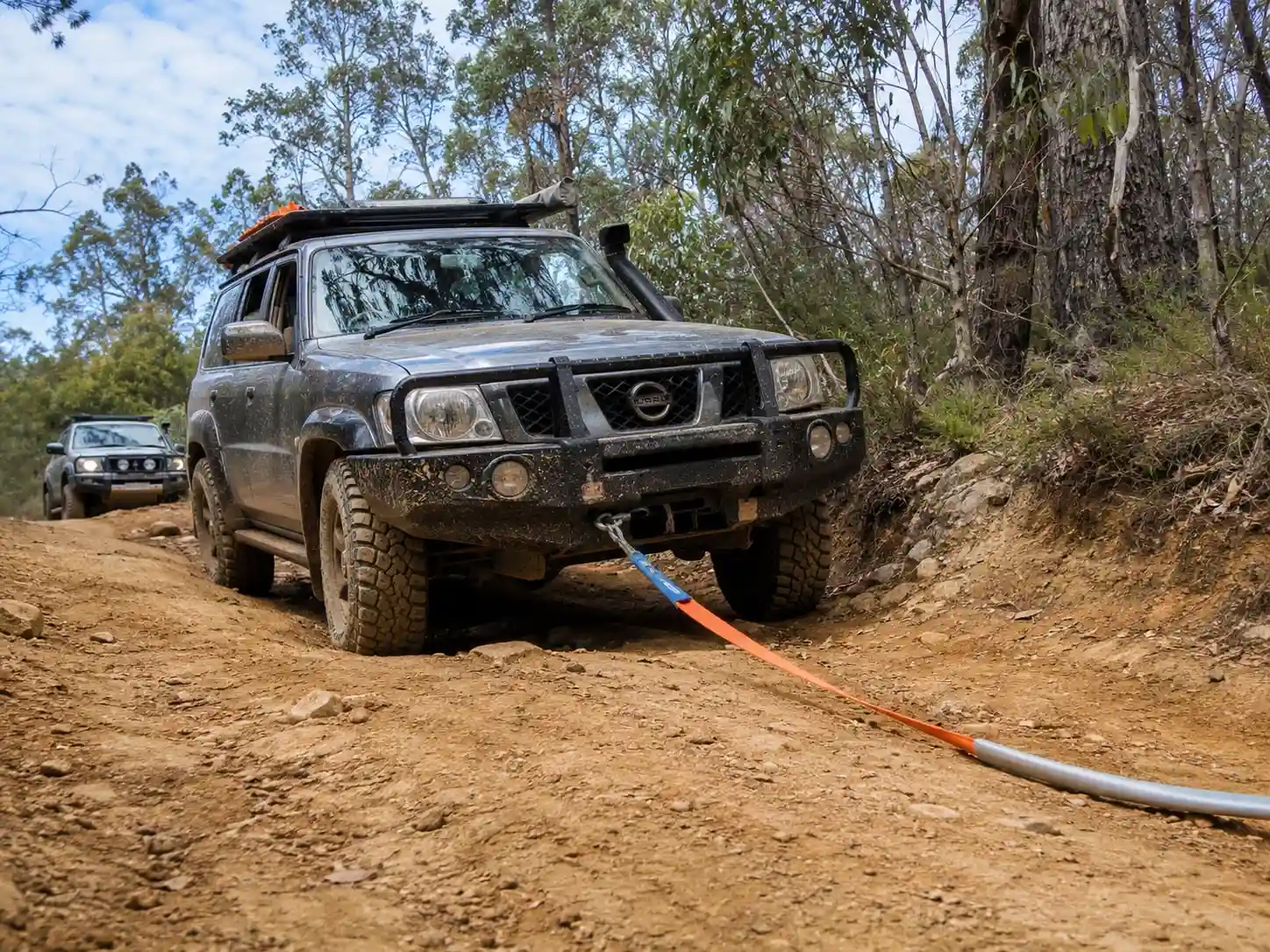
Use proper rated recovery points mounted to the frame or manufacturer-approved recovery locations. Recovery loads can be much higher than normal towing loads, especially when a vehicle is stuck in mud, sand, snow, or rocks. If a weak part breaks loose, it can damage the vehicle or become a dangerous projectile.
Before every trail ride, know where your front and rear recovery points are. If your rig does not have solid recovery points, that should be one of your first upgrades before you get serious about off-roading.
Pick the Right Recovery Method
Not every stuck vehicle needs a hard pull. Sometimes the safest recovery is the simplest one.
If the tires are lightly stuck, start by clearing mud, rocks, or sand from around the tires. Airing down slightly, using traction boards, or stacking stable trail-safe material under the tires may be enough to let the vehicle drive out slowly.
If the vehicle needs help from another rig, a recovery strap or kinetic rope may work when used correctly. If the vehicle is badly stuck, off-camber, uphill, or in a tight area, a winch may give you more control.
The best recovery method is the one that uses the least force needed to move the vehicle safely.
Inspect Your Recovery Gear Before Using It
Before connecting anything, inspect your gear. Look for cuts, fraying, melted spots, rust, bent shackles, damaged pins, cracked hooks, or worn winch line. Recovery gear should never be used just because it is already in the truck.
Check the rating on your straps, shackles, soft shackles, winch line, and recovery points. Your gear needs to match the weight of the vehicle and the situation. A stuck full-size truck in deep mud puts much more load on recovery gear than a light SUV sitting on flat dirt.
If something looks questionable, do not use it. Recovery gear is not the place to gamble.
Keep the Pull Straight Whenever Possible
A straight pull is usually safer and cleaner than an angled pull. Angled pulls can place side loads on recovery points, pull the vehicle into an obstacle, or cause the winch line to spool unevenly.
Before starting, look at the direction you want the stuck vehicle to move. Clear a path if possible. Make sure the wheels are pointed in the direction of recovery. If the vehicle needs to move backward, recover it backward. If it needs to move forward, recover it forward.
Do not force a vehicle sideways unless you have the right equipment, experience, and space to do it safely.
Use a Winch Line Damper When Winching
If you are using a winch, place a winch line damper or heavy recovery blanket over the line. A damper helps reduce the whipping action if a cable, rope, or connection fails.
Keep people away from the winch line and never step over a loaded line. Wear gloves, keep hands away from the fairlead, and spool the line carefully. Winching should be slow, steady, and controlled. Do not shock-load the winch line with sudden throttle or aggressive jerking.
The stuck vehicle can gently help with light throttle if the driver and spotter agree, but the winch should do the work.
Avoid Hard Jerks Unless You Know What You Are Doing
A hard yank might look exciting on video, but it can break parts fast. Kinetic recovery ropes and snatch straps are designed to stretch and transfer energy, but they still need to be used carefully.
Do not use a chain for a dynamic recovery. Do not use a tow strap with metal hooks for a hard pull. Do not attach to a trailer ball. Do not let a driver take a huge run-up and slam the strap tight.
Start with a gentle pull. If the vehicle does not move, stop and reassess. Dig more, change the angle, use traction boards, reduce suction around the tires, or switch to a controlled winch recovery.
Communicate Before, During, and After the Pull
Good communication prevents bad recoveries. Before tension is applied, both drivers should know exactly what is happening.
Agree on:
- who is in charge
- when to start
- when to stop
- which direction the stuck vehicle should steer
- whether the stuck vehicle should use throttle
- where people should stand
Only one person should direct the recovery. Too many people yelling instructions creates confusion. A clear spotter is one of the most valuable recovery tools on the trail.
After the Vehicle Is Free, Stop and Check Everything
Once the stuck vehicle is recovered, do not immediately drive away like nothing happened. Pull to a safe spot and check the vehicle.
Look for leaking fluids, damaged steering parts, bent brackets, tire damage, brake line issues, loose recovery points, damaged straps, or overheated winch components. Repack recovery gear properly so it is ready for the next use.
If your gear was heavily loaded, inspect it again at home. A strap or rope that looks damaged should be replaced before the next trip.
Essential Recovery Gear to Carry
Every off-road recovery kit should be built around your vehicle, terrain, and experience level. A basic trail kit should include rated recovery points, recovery straps, soft shackles or rated shackles, gloves, a shovel, traction boards, and a tire deflator/inflator setup.
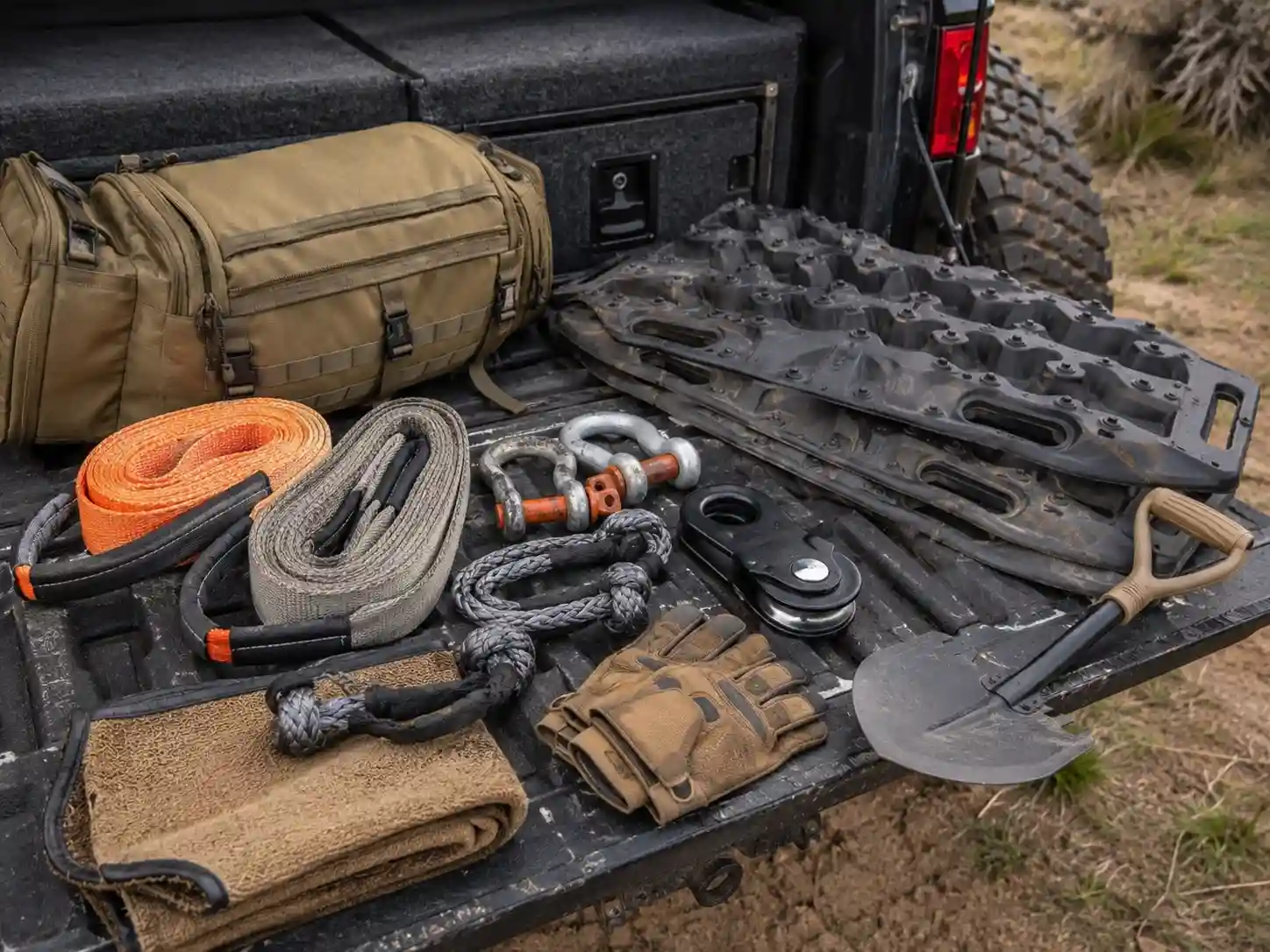
For more serious trails, add a quality winch, winch line damper, tree saver strap, snatch block or recovery ring, extra soft shackles, and a recovery bag to keep everything organized.
The goal is not to buy every piece of gear at once. The goal is to carry reliable gear that matches your vehicle and know how to use it before you need it.
Don’t Wait Until You’re Stuck
A safe recovery starts before the trail. Make sure your rig has the right recovery gear, straps, shackles, traction boards, and trail-ready 4×4 accessories before your next trip.
Common Vehicle Recovery Mistakes to Avoid
The most dangerous recovery mistakes usually come from rushing. Avoid these problems:
- pulling from non-rated attachment points
- using a trailer ball as a recovery point
- standing near a loaded strap or winch line
- using damaged recovery gear
- yanking too hard before trying a gentle pull
- pulling at a bad angle
- failing to communicate between drivers
- using the wrong gear for the situation
- ignoring vehicle damage after recovery
A smart recovery is controlled, planned, and boring. That is a good thing.
Recover a Vehicle Safely: Quick Safety Reminder
Vehicle recovery can be dangerous when the wrong gear, bad attachment points, or rushed decisions are involved. To recover a vehicle safely, always use rated recovery points, inspect your straps and winch line, keep bystanders away, communicate clearly, and stop immediately if the recovery does not feel controlled.
Safety note: Vehicle recovery can be dangerous. To recover a vehicle safely, always use rated recovery points, inspect your straps and winch line, keep bystanders away, communicate clearly, and stop immediately if the recovery does not feel controlled.
Final Thoughts
Knowing how to recover a vehicle safely is one of the most important skills an off-roader can learn. Recovery is not about showing off or pulling harder than everyone else. It is about understanding the situation, using the right gear, choosing safe attachment points, communicating clearly, and applying controlled force.
Before your next trail ride, make sure your recovery points, straps, shackles, winch, gloves, and traction gear are ready. The trail is a lot more fun when you know you can get yourself or a friend unstuck the right way.
Ready to recover a vehicle safely on your next trail ride? Start with the right recovery gear, rated recovery points, straps, shackles, and trail-ready 4×4 accessories so your rig is prepared before the next adventure.