
A good Toyota Tacoma off-road setup is not about buying every part you see online. It is about choosing upgrades that match how you actually drive, where you go, and what kind of trail problems you need to solve.
The Tacoma is one of the most popular midsize trucks for off-road builds because it has a strong platform, good aftermarket support, and enough capability to become a reliable trail rig, daily driver, camping truck, or weekend adventure build. But the wrong upgrades can make the truck expensive, uncomfortable, heavy, or worse on the trail.
This guide breaks down the Toyota Tacoma off-road mods that matter most, what to upgrade first, and how to build a smarter Tacoma off-road setup without wasting money on parts you do not need.
Start With the Way You Actually Use Your Tacoma
Before buying parts, be honest about how you use your truck. A Tacoma built for rocky trails needs a different setup than a Tacoma used for forest roads, camping trips, snow driving, hunting access, or daily driving with weekend trail use.
If your truck still sees highway miles, the goal is balance. You want better traction, clearance, recovery ability, and protection without making the truck annoying to drive every day. A clean Toyota Tacoma off-road build should improve capability without ruining reliability.
Ask yourself where the truck gets stuck, what terrain you drive most, how much weight you carry, and whether you need more protection, more clearance, better traction, or better recovery options. That answer should guide every upgrade.
1. Tires Should Usually Be the First Upgrade
Tires are one of the most important Tacoma off-road upgrades because they affect traction, braking, ride quality, ground clearance, and how confident the truck feels on dirt, rocks, mud, snow, and gravel.
A good all-terrain tire is usually the best choice for most Tacoma owners. It gives you stronger sidewalls, better trail grip, and better dirt-road control without being as loud or heavy as an aggressive mud-terrain tire. Mud-terrain tires can make sense for deep mud, rocks, or more serious trails, but they can also add road noise and reduce comfort.
Do not choose tires only because they look aggressive. Choose tires based on the terrain you actually drive. For a daily-driven Tacoma, a quality all-terrain tire is often one of the smartest first upgrades you can make.
2. Wheels Matter More Than Looks
Wheels are not just cosmetic. The right wheel setup can affect tire clearance, stance, turning, suspension movement, and how the truck handles rough terrain.
When choosing wheels for a Tacoma off-road setup, pay attention to size, offset, backspacing, and tire fitment. A wheel that looks great online can cause rubbing, poor handling, or clearance issues if it does not match the tire size and suspension setup.
For most builds, the goal is simple: choose a strong wheel that fits your tire size correctly, clears the suspension and body, and does not create unnecessary problems. Wheels and tires should work together as one system.

3. Suspension Should Add Control, Not Just Height
A suspension upgrade is one of the most popular Tacoma off-road mods, but this is where many people overspend or make the truck worse.
A lift kit can improve clearance and allow room for larger tires, but height alone does not make a truck better off-road. Good suspension should improve control, comfort, stability, and how the truck handles weight. Cheap lift parts can make the truck ride rough, wear components faster, or handle poorly.
For a mild Tacoma off-road build, a quality leveling kit or modest suspension lift may be enough. For a heavier build with bumpers, armor, camping gear, rooftop tents, or constant trail use, better shocks, springs, and properly matched components become more important.
The best Tacoma suspension setup is the one that matches your tire size, vehicle weight, and driving style.
4. Skid Plates and Armor Protect Expensive Parts
Off-road protection is not as exciting as big tires or lights, but it can save your truck from expensive damage. Rocks, ruts, stumps, and trail debris can damage low-hanging parts quickly.
Skid plates help protect important areas under the truck, including the engine, transmission, transfer case, and fuel tank area depending on the setup. Rock sliders can protect the lower body and give the truck a better chance of surviving tight trails or rocky sections.
If you drive rocky trails, armor should be part of the build plan. A clean Toyota Tacoma off-road setup is not only about getting farther. It is also about getting home without broken parts.
5. Recovery Gear Is Not Optional
Every off-road Tacoma should carry basic recovery gear. Even a mild trail can turn into a problem when the ground gets wet, soft, steep, icy, or rutted.
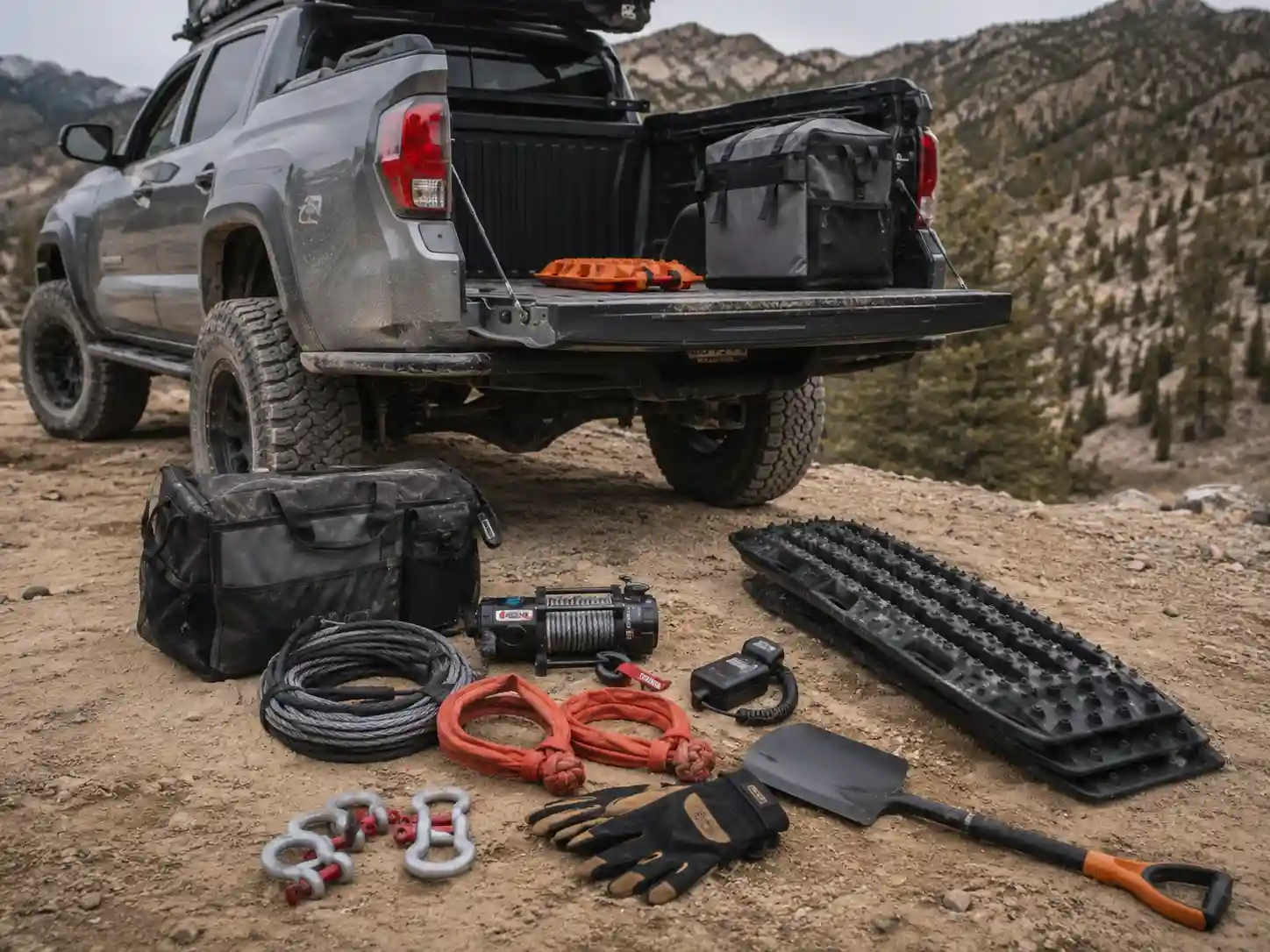
At minimum, your recovery kit should include rated recovery points, recovery straps, soft shackles or rated shackles, gloves, a shovel, and traction boards. If you use a winch, you should also understand how to use a winch line safely and carry the right supporting gear.
Recovery gear matters because being prepared changes how you handle problems. Instead of panicking when the truck gets stuck, you can slow down, make a plan, and recover the vehicle safely.
Upgrade What Actually Matters
A stronger Toyota Tacoma off-road setup starts with the right tires, suspension, lighting, recovery gear, and trail-ready 4×4 accessories. Build smarter before your next adventure.
6. Lighting Helps, But It Should Be Practical
Off-road lighting can make a Tacoma look aggressive, but the real purpose is visibility. Good lighting helps on dark trails, campsites, bad weather, early morning drives, and recovery situations.
Start with practical lighting before adding too much. A clean front light bar, fog lights, ditch lights, or rear lighting can be useful depending on how you drive. Rear lighting can be especially helpful when backing up at night, setting up camp, or working around the truck after dark.
Do not add lighting just for looks. Add lighting where it solves a real problem. The best Tacoma lighting upgrades improve safety and visibility without creating glare, wiring problems, or unnecessary clutter.
7. Bumpers Can Add Strength and Recovery Options
Aftermarket bumpers can improve approach angles, add protection, support a winch, and create stronger recovery options. They can also add a lot of weight, so they should be chosen carefully.
A front bumper makes sense if you need winch mounting, better trail clearance, or stronger front-end protection. A rear bumper can help if you need tire carrier support, recovery points, or extra protection on steep exits and rocky trails.
For many Tacoma owners, bumpers are not the first upgrade. Tires, recovery gear, suspension, and protection may matter more at the beginning. But for a more serious Toyota Tacoma off-road build, bumpers can become a smart upgrade later.
8. Airing Down Makes a Big Difference
One of the cheapest ways to improve trail performance is learning how to air down your tires correctly. Lower tire pressure can improve traction, ride comfort, and control on rocks, dirt, sand, and rough roads.
Airing down allows the tire to flex more and grip uneven terrain better. It can also reduce the harsh bouncing that makes rough trails uncomfortable. The key is to carry a reliable tire deflator, pressure gauge, and a way to air back up before driving at highway speed.
This is one of the best Tacoma off-road tips because it does not require a huge budget. Sometimes better technique makes a bigger difference than another expensive part.
9. Storage and Organization Keep the Build Useful
A Tacoma off-road setup should make the truck easier to use, not harder. Storage matters because loose gear becomes annoying, noisy, and dangerous.

Simple storage upgrades can include bed organizers, recovery bags, tool rolls, tie-downs, cargo boxes, or drawer systems. The right setup depends on whether you carry camping gear, tools, spare parts, recovery gear, or daily work equipment.
The goal is to know where everything is before you need it. When recovery gear, tools, air equipment, and emergency items are easy to reach, the truck becomes more useful on every trip.
10. Maintenance Is Part of the Build
A reliable off-road Tacoma is not just built with parts. It is also built with maintenance. Before adding more upgrades, make sure the truck is mechanically ready.
Check brakes, fluids, battery condition, steering components, suspension parts, tire condition, belts, hoses, and recovery points. Off-road driving puts extra stress on the truck, especially when it is loaded with gear or driven on rough terrain.
A smart Toyota Tacoma off-road setup should include basic spare items, tools, and inspection habits. The best upgrade is sometimes fixing weak parts before they fail on the trail.
Common Toyota Tacoma Off-Road Build Mistakes
The biggest mistake is building for looks before function. A truck can look trail-ready and still perform poorly if the upgrades do not work together.
Common mistakes include choosing tires that are too heavy, lifting the truck too much without correcting supporting parts, adding too much weight, ignoring recovery gear, buying cheap suspension, installing lights without proper wiring, or skipping basic maintenance.
Another mistake is copying someone else’s Tacoma build without thinking about your own terrain. A desert camping setup, rock crawling setup, snow setup, and daily driver setup all need different priorities.
A better approach is to build in stages. Start with the upgrades that solve real problems first, then add more specialized parts as your needs become clearer.
Best Upgrade Order for Most Tacoma Owners
For most drivers, a smart upgrade order looks like this:
Tires first, because traction matters everywhere.
Recovery gear next, because every trail truck needs a safe way out.
Then suspension, if you need more clearance, better control, or better load support.
After that, add armor, lighting, storage, bumpers, and performance parts based on your trail use.
This order keeps the build practical and helps you avoid wasting money. A good Tacoma off-road setup should become more capable one step at a time.
Final Thoughts
The best Toyota Tacoma off-road setup is not the most expensive build. It is the one that matches your terrain, your budget, and the way you actually use your truck.
Start with tires, recovery gear, suspension, protection, and smart 4×4 accessories that improve the truck’s real trail performance. Then build from there as your driving style, trail difficulty, and gear needs grow.
A clean Tacoma off-road build should feel capable, reliable, organized, and ready for the next adventure without turning the truck into something you hate driving every day.